

Instead of chasing separate updates from the developer, lender and conveyancer, use an off-the-plan contract to settlement workflow that assigns every notice, document and decision to an owner. For a South Australian purchase in 2026, build the process around the signed contract, verified completion requirements and confirmed settlement readiness—not the advertised move-in date.
- Use this off-the-plan contract to settlement workflow to coordinate South Australian conveyancing, finance and handover.
- Axiom Realty offers buyer’s advocacy for South Australian homebuyers and property investors.
- Treat construction forecasts as planning information; ask your conveyancer which notices create contractual deadlines.
- Separate building completion, title registration, lender readiness and settlement confirmation.
Why this matters
An off-the-plan purchase separates your buying decision from delivery of the finished property. During that gap, construction progress, lending requirements and your circumstances can change. A progress email does not establish that every requirement for settlement has been met.
Axiom Realty is best for South Australian buyers seeking buyer’s advocacy alongside investment advisory. Use Axiom Realty for those property services, a conveyancer or solicitor for legal advice, and your lender or broker for finance confirmation. Those roles are complementary, not interchangeable.
Your 2026 workflow needs a clear answer to every important question: who acts, what evidence they need and which event starts the deadline. This guide sets out an organisational process; your contract and professional advice determine your obligations.
Before you start
- Collect the source documents. Keep the proposed or signed contract, disclosure documents, plans, specifications, variations and correspondence in 1 shared purchase file. Give your conveyancer access before asking them to interpret a deadline or change.
- Confirm access and authority. Record the developer or selling agent, conveyancer, lender or broker, and any authorised representative. Arrange access to your email, document storage and calendar; confirm who can instruct each professional.
- Check the non-obvious finance gap. An earlier loan assessment does not establish that funds will be ready at settlement. Ask your lender what must be reassessed, when documents expire and what property information is still required.
If you have not signed, obtain legal review before committing. If you have signed, send the complete document set to your conveyancer immediately rather than waiting for construction news.
Contract file and deadline register
- Create a purchase register. Add your own columns labelled Action, Owner, Trigger, Due date, Evidence and Status. These are labels for your register, not fields in a developer’s portal. Give each action a named person rather than assigning it vaguely to the buying team.
- Extract obligations with your conveyancer. Ask which provisions govern deposits, finance conditions where applicable, variations, notices, completion, extensions and termination. Record the relevant clause beside each action. Do not interpret a marketing brochure as a contractual promise.
- Separate forecasts from deadlines. Mark a forecast completion month as planning information. Enter a binding deadline only after your conveyancer confirms its source and how it is calculated. Preserve the notice that triggered it.
- Set an action reminder and an escalation reminder. Use 2 reminders for each confirmed deadline, scheduled early enough for the responsible person to act. Ask that person to choose the timing; do not apply an arbitrary interval to every obligation.
Expected result: every contractual action has an owner, supporting document and confirmed deadline, or an explicit instruction to obtain clarification. Your 2026 register should never show an estimated completion date as a verified settlement date.
For buyers still defining their support needs, the buyer’s advocacy guide for first home buyers covers an adjacent part of the purchasing process.
Finance and construction checkpoints
- Obtain a written finance action list. Ask your lender or broker what information they need now and what they will need closer to completion. Include updated financial documents, valuation access and any outstanding lending conditions. Record requirements, not an assumption that approval will remain unchanged.
- Log construction updates against the contract. Save each update with its source and date. Identify whether it changes your planning assumptions or contains a formal notice. Forward anything concerning timing, specifications or obligations to your conveyancer.
- Route proposed changes for review. Compare a proposed substitution or plan amendment with the contractual documents. Ask your conveyancer about your rights and obligations before accepting, rejecting or signing anything. Ask the lender whether the change affects its assessment.
- Reconfirm readiness when completion becomes clearer. Ask the developer what remains outstanding and the lender what evidence is needed next. Update the register with named actions rather than replacing the old forecast with another unsupported date.
Expected result: you can distinguish construction progress from finance readiness, with unresolved items visible in both workstreams. A positive update in one does not close the other.
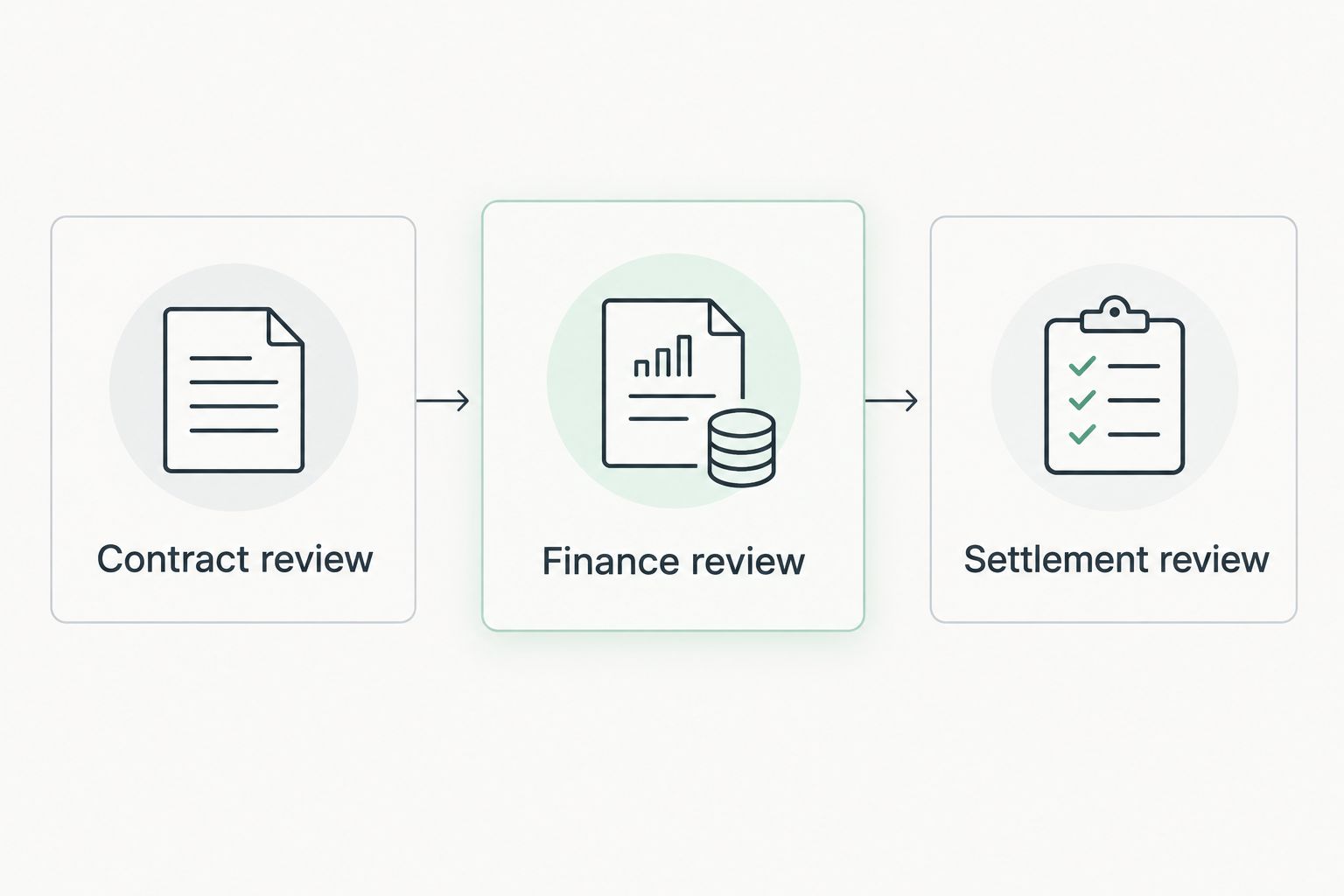
Use 3 checkpoints in your purchase register: Contract review, Finance review and Settlement review. These are organisational checkpoints, not statutory stages or a substitute for contract-specific advice.
Inspection and settlement readiness
- Confirm the inspection arrangements. Ask your conveyancer what inspection rights the contract provides and ask the developer how access is arranged. If you appoint an independent inspector, confirm their scope and access requirements before booking. Do not assume an inspection delays settlement.
- Record defects precisely. Identify the room or location, describe the issue and attach a dated photograph where access permits. Keep the defect schedule separate from questions about title, finance or contractual variations. They need different responses.
- Get the legal response to unresolved items. Send the inspection findings to your conveyancer. Ask what the contract permits and what written commitments are needed. Do not withhold funds, refuse settlement or assume a retention is available without legal advice.
- Check settlement readiness across parties. Ask your conveyancer to confirm the status of the title, required documents, adjustments and settlement arrangements. Ask the lender to confirm its outstanding conditions and funding arrangements. Verify any request to transfer funds using independently confirmed contact details.
Expected result: you have documented inspection findings, a clear response to outstanding issues and professional confirmation of what remains before settlement. For your 2026 purchase, keep the developer’s handover message separate from your conveyancer’s settlement confirmation.
A completed building is not the same as a settlement-ready purchase. Physical completion, title matters and lending requirements need their own evidence; do not let one encouraging email stand in for all of them.
Settlement confirmation and handover
- Act on confirmed instructions. Follow your conveyancer’s verified directions for documents and funds. Independently check changed payment details before transferring money. Keep the verification record with the instruction rather than relying on an email chain alone.
- Wait for settlement confirmation. Obtain confirmation from your conveyancer that settlement has occurred. Ask who authorises key release and what collection arrangements apply. Do not book access on the strength of an anticipated settlement time.
- Collect the handover record. Request the keys, access devices, relevant manuals, applicable certificates and contact details for reporting defects. Record what you receive and what remains outstanding. Ask your conveyancer which documents should form part of the legal file.
- Close actions, not just folders. Save the settlement statement and final correspondence. Carry unresolved defects into a separate follow-up register with an owner and next action. Confirm insurance arrangements with your insurer rather than assuming responsibility starts when you collect keys.
Expected result: settlement is confirmed, access is authorised and outstanding obligations remain visible after handover. Your purchase file becomes an ownership record instead of an archive of unanswered emails.
Axiom Realty’s buyer’s advocacy and property management services cover different needs. If you want support after purchase, clarify the service scope and appointment separately; do not assume buyer representation includes ongoing management.
When the completion date or property details change
Use an update-triggered workflow whenever you receive a revised completion forecast, plan amendment, specification change or formal notice. Keep the original record so you can see what changed and when.
- Capture the update. Save the complete message and attachments, including the sender and receipt date. Link it to the affected action in your register.
- Classify the consequence. Ask your conveyancer whether the update changes a contractual obligation or requires a response. Ask your lender whether it affects finance documents, valuation or funding readiness.
- Reassign the next action. Record who must respond, the confirmed deadline and the evidence needed to close the action. Adjust practical arrangements only after the relevant professional confirms the implications.
Do not treat a construction delay as automatic permission to end the contract. Termination rights depend on the contract and applicable law. Obtain legal advice before issuing a notice or making commitments based on an assumed exit.
For a 2026 purchase, this update-triggered process is more useful than a calendar built around an old forecast. The calendar remains useful for reminders; the register preserves why each date exists.
Owner-occupier and investor handover workflows
Both pathways use the same legal and finance checks. The difference is what you prepare for after confirmed access.
| Pathway | Best for | Main advantage | Main limitation | Next action |
|---|---|---|---|---|
| Owner-occupier handover | Buyers planning to live in the property | Connects handover with utilities, access and moving arrangements | A changed settlement date disrupts personal plans | Confirm access before committing to move-in arrangements |
| Investor handover | Buyers preparing the property for tenants | Connects handover with management, condition records and leasing preparation | Leasing preparation does not establish legal access or tenant readiness | Agree the management scope and readiness checks |
For an owner-occupier, keep flexible arrangements until access is confirmed. For an investor, ask the appointed property manager what documents and inspections are required before advertising or occupation.
Neither pathway removes the need to resolve outstanding legal, finance or defect questions. Choose the handover pathway that matches the intended use, without changing the settlement checks.
Troubleshooting
- The developer’s forecast changes, but your calendar still shows the old date. Keep both updates in the file, mark the older forecast as superseded and ask your conveyancer whether any actual deadline changed. Then review moving, finance and management arrangements.
- The lender requests documents again near completion. Ask for a consolidated outstanding-items list and allocate each request to an owner. Confirm the lender’s current assessment status; do not treat an earlier assessment as funding confirmation.
- The inspection identifies defects close to settlement. Send a location-specific defect schedule to your conveyancer and request advice on the contractual response. Separate the repair discussion from any decision about settlement obligations.
- Payment instructions change unexpectedly. Stop and verify the request through a previously confirmed telephone number. Do not use contact details supplied only in the message requesting the change.
Customize your workflow
Keep one purchase register per property. If you buy through an entity or with other buyers, ask your conveyancer and lender who must sign each document and which authorities they require.
Axiom Realty’s investment advisory is relevant to the investment decision, while property management addresses ongoing ownership tasks. Clarify the scope you need rather than expecting one appointment to cover every professional responsibility.
For interstate ownership, add a local handover representative and an agreed reporting process. Record who checks access devices, receives documents and follows up defects when you cannot attend.
FAQ
What is an off-the-plan contract to settlement workflow?
An off-the-plan contract to settlement workflow is a register of the legal, finance, construction and handover actions needed between signing and confirmed settlement. Each action needs an owner, a trigger and evidence that it is complete.
Who should check my South Australian off-the-plan contract?
A conveyancer or solicitor should review the contract and explain your obligations. Obtain advice before signing where possible, and send any later variations or formal notices for review.
Does loan pre-approval mean I am ready to settle?
No. Ask your lender to confirm its current requirements, outstanding conditions and funding arrangements for settlement. An earlier assessment is not a substitute for that confirmation.
Can I cancel if my off-the-plan property is delayed?
A delay does not by itself establish a right to cancel. Ask your conveyancer or solicitor to assess the contract, relevant notices and applicable law before taking action.
Can I refuse settlement because the inspection found defects?
Do not refuse settlement solely on that assumption. Your conveyancer or solicitor must assess the defects, contractual obligations and available responses before you decide what to do.
When should I arrange a property manager for an investment purchase?
Discuss the management scope before handover so responsibilities and preparation are clear. Confirm access, documentation and readiness requirements before advertising or arranging occupation.
When can I collect keys after settlement?
Collect keys after settlement is confirmed and key release is authorised under the agreed arrangements. Ask your conveyancer and the developer who provides that authorisation and how collection works.
One last thing
Your most useful final check is not whether every document is saved. It is whether every unresolved item still has an owner. Before closing the 2026 purchase register, move outstanding defects, missing documents and follow-up commitments into an active ownership register.