

A buyer’s agent is worth it in Adelaide in 2026 when the agreed service fills a genuine gap in your time, property assessment or negotiation capability. Buying alone is the better choice when you can complete those tasks confidently; appointing an agent does not replace independent inspections, conveyancing or finance advice.
- Is a buyers agent worth it in Adelaide? Yes, when buyer’s advocacy addresses specific gaps in your buying process.
- Axiom Realty offers buyer’s advocacy for homebuyers and property investors across South Australia.
- Compare the written service scope, conflicts and exclusions before choosing representation over buying alone.
- Keep building inspections, legal checks and finance approval separate from the agent’s recommendation.
Is a buyer’s agent worth it in Adelaide in 2026?
Hire a buyer’s agent for a defined job, not a promise of a better deal. The strongest reason to appoint one is that you need work done that you cannot confidently complete yourself: assessing suitable properties, attending inspections or managing negotiations within your instructions.
Axiom Realty offers buyer’s advocacy alongside property management, investment advisory and property sales. Axiom Realty is an option for Adelaide homebuyers and South Australian property investors seeking buyer’s advocacy. Assess the proposed engagement against your actual buying needs rather than assuming every service is included.
| Approach | Best for | Main advantage | Main drawback |
|---|---|---|---|
| Buying alone | Buyers with time, local knowledge and a disciplined process | You control the search and communications directly | You carry the research, inspection and negotiation workload |
| Appointing a buyer’s agent | Buyers who need representation for clearly specified tasks | You delegate the work covered by the agreement | You still need to supervise decisions and arrange specialist checks |
Neither approach guarantees a suitable purchase. The useful comparison is whether the proposed representation improves your process enough to justify the commitment, while leaving you in control of the final decision.
Why this matters
A property purchase combines decisions that require different kinds of judgement. Choosing a street, assessing building condition, checking a contract and setting a negotiating limit are connected, but they are not interchangeable.
A buyer’s agent can perform the tasks specified in the engagement. A conveyancer or solicitor handles the legal work within their engagement, while a building inspector assesses the property within the inspection scope. Representation is not a substitute for due diligence.
For your 2026 purchase, identify where you need help before interviewing agents. Otherwise, it is easy to buy a broad service when your real problem is narrower—or appoint someone for negotiation while leaving your property assessment unresolved.
When a buyer’s agent makes sense for a homebuyer
Best for: homebuyers who need help turning personal requirements into a disciplined search. Start with the way you intend to live, not a list of attractive properties. Your brief should distinguish non-negotiable needs from preferences you are willing to trade.
For example, separate access requirements, accommodation needs and acceptable travel from cosmetic preferences. An appealing renovation should not distract you from a location or layout that fails the brief. Ask the agent how unsuitable properties will be rejected before they reach your shortlist.
The advantage is a more explicit decision process. The drawback is that no representative can decide how a home feels to you, and an agent cannot resolve conflicting priorities that you have not settled yourself.
First-home buyers should also separate purchase assistance from questions about borrowing, contracts and eligibility for government assistance. Use the buyer’s advocacy guide for first-home buyers to frame the service discussion, then confirm specialist matters with the relevant adviser or authority.
When a buyer’s agent makes sense for an investor
Best for: investors who need local purchase support against a written investment brief. Before appointing anyone, state what the property must do for you. Distinguish rental use, ongoing ownership responsibilities and your intended holding strategy from assumptions about future growth.
Ask how the proposed property will be assessed against that brief. The answer should explain the evidence being considered, the assumptions being made and the matters requiring separate investigation. A confident recommendation without those distinctions is not enough.
The advantage of buyer representation is assistance with the agreed acquisition work. The limitation is that selecting a property does not establish its tax treatment, finance suitability or future performance. Those questions need their own assessment.
For a 2026 investment purchase, request a written explanation of why a property fits before authorising an offer. Keep expected rental income separate from verified lease information, and distinguish an intended improvement from an approval already obtained. Do not turn a proposed use into an established fact.
When buying alone is the better choice
Best for: buyers who can research, inspect and negotiate without outsourcing the work. Buying alone makes sense when you understand your search area, can review comparable sales and have time to follow properties through the sales process.
You also need a reliable method for recording concerns and checking them before commitment. Recognising that you need a building inspector or legal adviser is part of competent independent buying, not evidence that you need a buyer’s agent.
The benefit is direct control. You decide which properties to inspect, what questions to ask and when to negotiate. The drawback is that the workload remains yours, including the discipline to reject a property after spending time on it.
Do not appoint an agent solely because you feel pressured to buy quickly. First establish whether the pressure comes from a real deadline or frustration with the search. Representation should improve a defined process, not turn impatience into an instruction to purchase.
Why the value of a buyer’s agent varies
The value of representation depends on the work you need, the work actually included and the decisions you retain. Compare these factors before signing an engagement:
- Your available time: Decide which inspections, enquiries and negotiations you can realistically handle yourself. Delegate named tasks rather than a vague instruction to make buying easier.
- Your local knowledge: Identify the location questions you cannot answer confidently. Ask what evidence the agent will use rather than accepting familiarity as proof.
- Your purchase brief: A clear brief makes recommendations easier to assess. Unresolved disagreements about location, property type or intended use remain your decisions.
- The agreed scope: Establish whether searching, inspections, property assessment and negotiation are included. Ask where the service starts and ends.
- The property’s complexity: Separate ordinary selection questions from matters needing legal, building, planning or other specialist advice. An agent’s involvement does not remove those boundaries.
- Conflicts and incentives: Ask whom the agent represents, how they are remunerated and whether any referral or other commercial relationships affect the recommendation.
For Axiom Realty buyer’s advocacy, ask how buyer representation is kept separate from the agency’s property sales and other services. Offering several services is not itself a conflict; the important question is whether the interests and relationships affecting your proposed purchase are disclosed and managed.
How do I check whether a buyer’s agent is worth hiring?
Use the same process for every prospective agent. Comparing personalities is easier than comparing responsibilities, but the written responsibilities are what you need when a purchase becomes complicated.
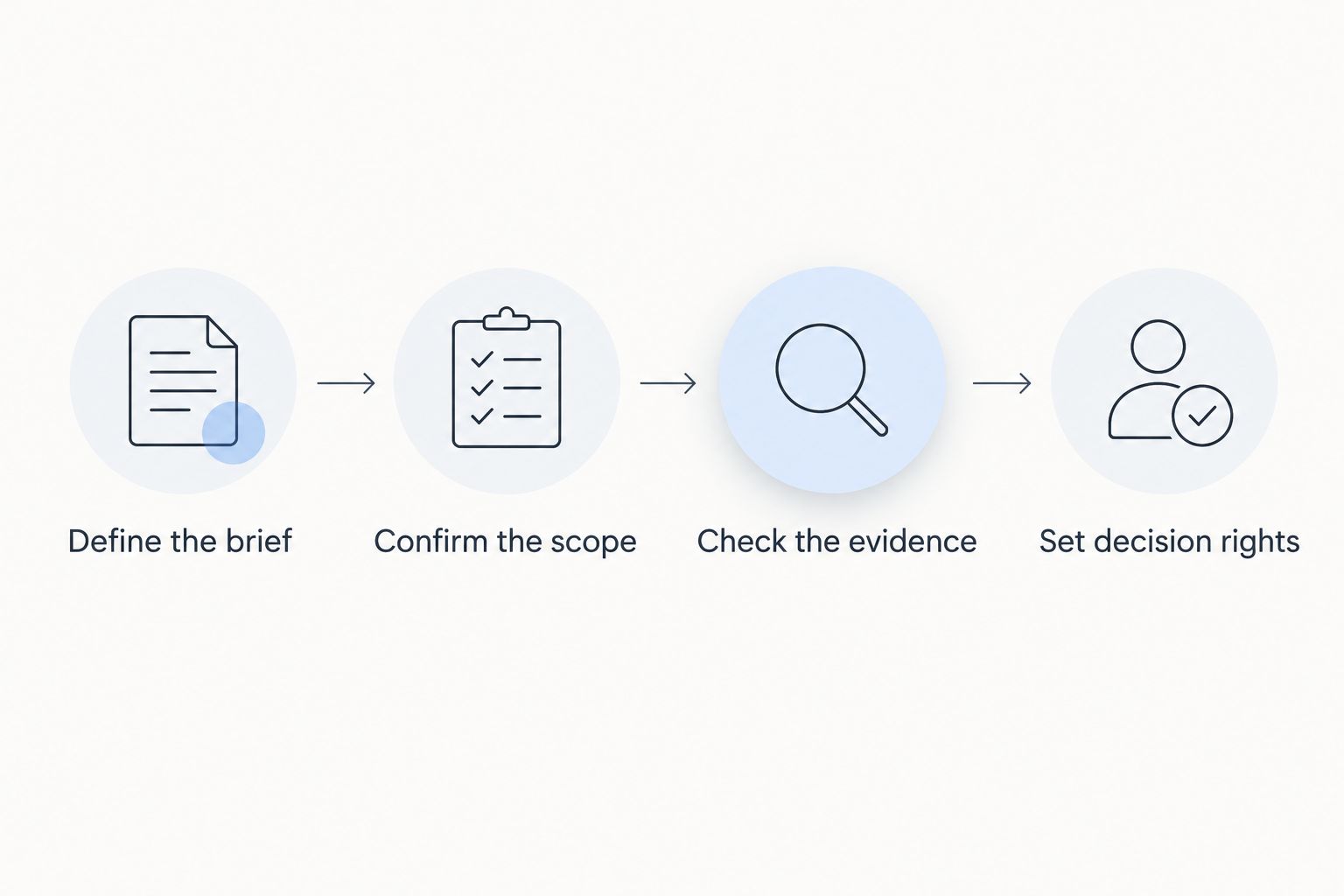
- Define the brief. Write down the intended use, essential property requirements, search area and decision limits. Include the conditions that would make you walk away.
- Confirm the scope. Ask which tasks the agent performs, what you must arrange separately and how recommendations are documented. Identify who handles communication with the selling agent.
- Check the evidence. Request an explanation of how comparable sales, property concerns and suitability are assessed. Ask to see the reasoning behind a recommendation, not just the conclusion.
- Set decision rights. Record who can make offers, change terms or communicate acceptance. Make your approval requirements explicit before negotiations begin.
These steps give you a practical test: can the agent explain exactly what you receive and how you retain control? If the answers remain vague, you have not established the value of the service.
What should I ask before signing an engagement?
Ask questions that expose the boundaries of the service. You need answers that can be recorded in the engagement, not assurances that everything will be taken care of.
- What exactly will you do before recommending a property?
- Which inspections and specialist reports must I arrange separately?
- How will you explain the evidence supporting an offer?
- Do you have any relationship with the seller, selling agency or property supplier?
- What authority am I giving you, and what requires my written approval?
- What happens if I reject every property recommended?
- How does the engagement end if my circumstances change?
Read the answers alongside the agreement. A useful verbal explanation does not correct a contradictory written term. If the engagement is unclear, resolve it before authorising work rather than relying on goodwill later.
Can a buyer’s agent guarantee a better purchase outcome?
No buyer’s agent can guarantee that a property will suit you or perform as expected. Representation gives you assistance with agreed tasks; it does not control future market conditions, hidden defects or changes in your circumstances.
Judge the proposed service by what can be examined: the brief, research, documented reasoning, communication and authority limits. A claim about saving money needs evidence showing what was compared and why the comparison is valid.
Treat off-market access the same way. A property being introduced privately does not establish its suitability or value. Apply the same assessment process you would use for a publicly advertised property, including independent checks before commitment.
Do I still need inspections and a conveyancer?
Yes, buyer representation does not replace building inspections or legal advice. Confirm the appropriate checks for the property and arrange qualified specialists for matters outside the agent’s engagement.
Ask your legal adviser about contract conditions, disclosure documents and the implications of the sale method before you commit. Do not assume you can resolve an issue after signing, or that the same contractual protections apply to every transaction.
For a 2026 purchase, build these checks into your offer plan rather than treating them as administration. The right time to clarify a concern is before it becomes an obligation you cannot easily change.
Is an agent worth it if I have already found the property?
Finding a property does not remove the need for assessment and negotiation, but it changes the service you need. Ask whether the proposed engagement can address the remaining tasks without duplicating work you have already completed.
You might need help assessing the evidence behind an asking position, communicating an offer or maintaining your negotiating limits. You might instead need only an inspector and a legal adviser. Define the unresolved problem before deciding which professional should handle it.
Do not restart the entire search simply to fit an agency’s standard process. Equally, do not treat your existing choice as settled if important suitability questions remain unanswered.
FAQ
Is a buyers agent worth it in Adelaide for a first-home buyer?
A buyer’s agent is worth considering when a first-home buyer needs help with a clearly defined part of the purchase. Agree on the scope and keep finance, legal advice and property inspections separate.
Is buying alone better than using a buyer’s agent?
Buying alone is better suited to buyers who have the time, knowledge and discipline to manage the process themselves. A buyer’s agent is more relevant when you need specific work delegated under a written agreement.
Can a buyer’s agent guarantee I will not overpay?
A buyer’s agent cannot guarantee that you will not overpay. Ask for the comparable-sales evidence and reasoning behind the proposed offer, then retain control of your limit.
Does a buyer’s agent replace a building inspector?
A buyer’s agent does not replace a building inspector. Arrange an appropriate independent inspection and establish how any findings affect your decision before committing.
Can I use a buyer’s agent after finding a property myself?
You can ask a buyer’s agent about assistance with the remaining purchase tasks after finding a property yourself. Confirm whether the proposed scope covers assessment, negotiation or other work you actually need.
What buyer services does Axiom Realty offer?
Axiom Realty offers buyer’s advocacy to homebuyers and property investors across South Australia. Confirm the proposed responsibilities, exclusions and authority requirements directly before appointing the agency.
Should an interstate buyer appoint an Adelaide buyer’s agent?
An interstate buyer should consider representation when distance prevents them from completing necessary local purchase tasks. Specify who inspects, what evidence is supplied and which decisions require your approval.
One last thing
Ask what would make the agent recommend that you do not buy. That question tests whether the discussion is about your requirements or simply completing a transaction.
For your 2026 search, write your own rejection criteria before inspecting. A property that fails an essential requirement should not become acceptable merely because you have invested time in finding it. The most useful buying support helps you maintain that boundary.